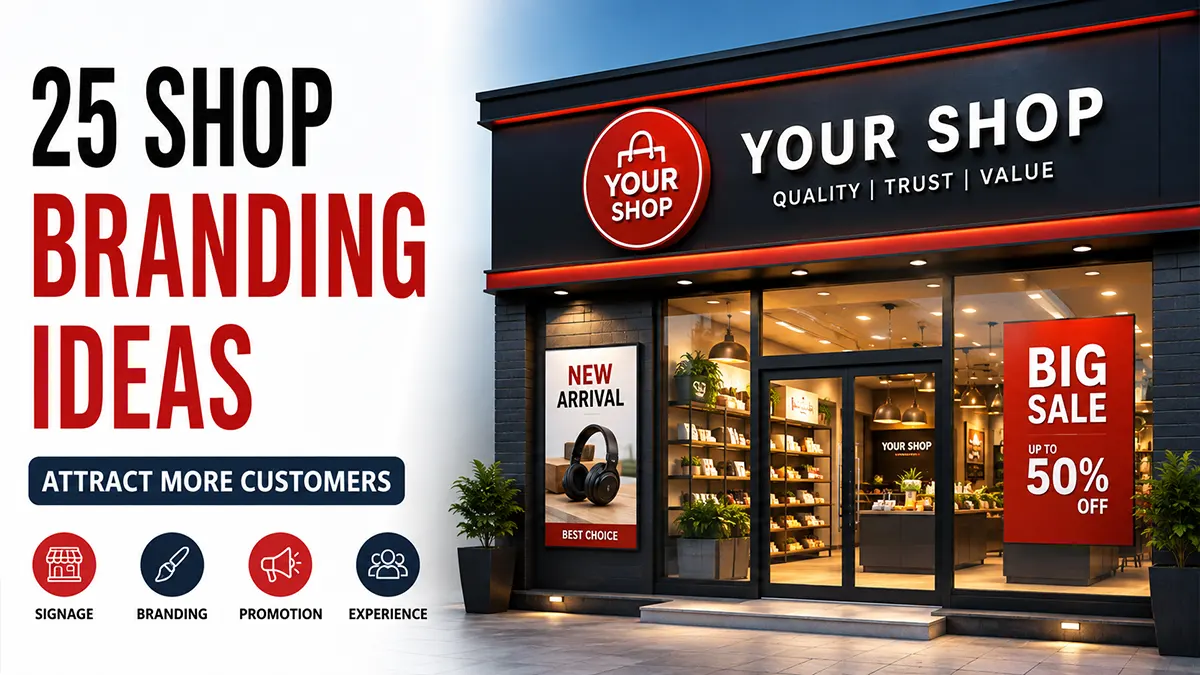
A shop is often the first physical point of contact between a business and its customers. Before a customer enters the store, the storefront, sign board, colours, windows, and overall appearance can influence how the business is perceived.
Effective shop branding helps create a recognizable identity for a business. It brings together visual elements such as the business name, logo, colours, typography, signage, displays, and promotional graphics.
Whether you operate a retail store, showroom, restaurant, salon, pharmacy, electronics shop, clothing store, or another local business, thoughtful branding can help communicate what your business offers and make the storefront easier to recognize.
In this guide, we cover 25 practical shop branding ideas for 2026, from storefront improvements to signage, wall graphics, window branding, lighting, displays, packaging, and promotional elements.
What Is Shop Branding?
Shop branding is the process of using consistent visual and communication elements to represent a business at its physical location.
It can include the shop name, logo, colour palette, signage, storefront design, window graphics, wall branding, product displays, promotional materials, lighting, packaging, and other customer-facing elements.
The objective is not simply to decorate a store. A well-planned branding system should make the business easier to identify while communicating useful information to customers.
Why Is Shop Branding Important?
Customers may see a shop from the road, while walking through a commercial area, or while searching for a particular product. A clear and recognizable storefront can help communicate the identity of the business before customers enter.
Improves Store Visibility
Clear signage and an organized storefront can make a business easier to notice from nearby streets and shopping areas.
Builds Brand Recognition
Consistent use of a logo, colours, and typography can help customers identify the business more easily.
Creates a Professional Appearance
A consistent storefront can communicate that the business pays attention to its customer-facing presentation.
Communicates Important Information
Signage and displays can communicate the business name, products, services, offers, timings, and contact details.
Key Elements of Effective Shop Branding
Before choosing individual branding ideas, businesses should establish a consistent visual identity. This helps ensure that different elements of the shop work together rather than appearing unrelated.
| Element | Purpose |
|---|---|
| Business Name | Makes the business identifiable. |
| Logo | Provides a recognizable visual identity. |
| Brand Colours | Creates visual consistency. |
| Typography | Maintains a consistent communication style. |
| Signage | Communicates the business name and key information. |
| Storefront Graphics | Adds visual identity to the physical location. |
| Window Displays | Highlights products, services, or promotions. |
25 Shop Branding Ideas to Consider in 2026
The following ideas can be adapted according to your business type, storefront size, location, target audience, and available budget.
Create a Clear Shop Sign Board
A clear sign board should make the business name easy to identify. Use readable typography, sufficient contrast, and a design that reflects the overall brand identity. Avoid overcrowding the sign with too much information.
Use Consistent Brand Colours
Choose a small set of brand colours and use them consistently across the storefront, signage, promotional graphics, packaging, and other customer-facing materials.
Make the Logo Prominent
Place the business logo where it is clearly visible without allowing it to compete with too many other visual elements. Consistent logo placement can support brand recognition.
Add Storefront Graphics
Storefront graphics can add visual character to an otherwise plain exterior. Graphics can communicate products, services, brand messages, or other relevant information.
Use Window Branding
Window graphics can make use of otherwise unused glass surfaces. Businesses can display selected products, services, offers, opening information, or brand messaging while maintaining appropriate visibility into the store.
Add Exterior Wall Branding
Exterior walls can provide additional space for communicating your brand identity. Depending on the location and available surface, businesses can use wall graphics, brand colours, product visuals, or simple promotional messages.
Improve Entrance Branding
The entrance is one of the first areas customers interact with. Use consistent colours, logos, signage, door graphics, or welcome messages to create a clear connection between the storefront and interior branding.
Use Attractive Lighting
Appropriate lighting can improve storefront visibility, particularly during evening hours. Illuminated signage or subtle accent lighting can help important branding elements remain visible.
Create a Branded Reception or Counter
For shops with a reception, billing counter, or customer-service desk, adding the business logo and brand colours can reinforce the visual identity inside the store.
Use Branded Wall Graphics
Interior wall graphics can transform plain walls into branded spaces. Businesses can use them for logos, product categories, brand stories, service information, or simple visual elements.
Add Product Category Signage
Product category signs can make a shop easier to navigate while maintaining a consistent brand appearance. Use clear typography, simple icons, and consistent colours.
Use Branded Promotional Posters
Promotional posters can highlight seasonal offers, new products, events, or important announcements. Keep promotional artwork aligned with the main brand colours and visual style.
Add a Roll-Up Standee
A roll-up standee can provide a flexible promotional display near the entrance, billing counter, or another suitable area. It can be moved or updated for temporary campaigns.
Create a Consistent Window Display
A well-planned window display can communicate what the shop sells before customers enter. Use selected products, graphics, brand colours, and promotional messages while keeping enough visual space.
Use Branded Floor Graphics
Where appropriate, floor graphics can guide customers through the store, highlight selected sections, or support promotional campaigns. They should be installed carefully to avoid safety issues.
Use a Branded Awning or Canopy
A branded awning or canopy can provide additional visibility around the entrance while creating a visual connection with the main storefront.
Create a Branded Photo Wall
A branded wall can create a visually recognizable area inside a store. Include the logo, brand message, or distinctive design elements to create a consistent backdrop for photographs and social content.
Use Digital Display Screens
Digital screens can be useful for businesses that regularly update product information, promotions, announcements, or visual content.
Add Branded Promotional Displays
Promotional displays can highlight new products, seasonal campaigns, special offers, or featured services. Use a clear visual hierarchy so customers can quickly understand the promotion.
Create Seasonal Shop Branding
Seasonal graphics can be used for festivals, holidays, special events, product launches, or limited-time campaigns. Keep temporary designs consistent with the core brand.
Use Branded Shopping Bags and Packaging
Branded bags, boxes, labels, stickers, and packaging materials can extend the shop's visual identity beyond the physical store.
Add Directional Signage
Directional signs can help customers find billing counters, fitting rooms, product sections, entrances, exits, or other important areas.
Create a Branded Customer Service Area
If your shop provides consultations, support, bookings, or customer assistance, a dedicated branded service area can make the space easier to identify.
Use QR Codes for Digital Engagement
A QR code can connect physical shop branding with a website, product catalogue, enquiry form, social media profile, or campaign landing page. Always test the code before production.
Maintain a Consistent Brand Experience
The most important idea is consistency. Your storefront, sign board, windows, walls, displays, packaging, and digital touchpoints should use a coherent visual identity.
Common Materials Used for Shop Branding
The appropriate material depends on where the branding will be installed, how long it needs to remain in place, the desired appearance, maintenance requirements, and available budget.
| Material / Format | Common Application | Key Consideration |
|---|---|---|
| Acrylic | Signage and indoor branding | Clean and professional appearance |
| ACP | Exterior sign boards and facades | Finish depends on installation |
| Vinyl Graphics | Windows, walls, and selected surfaces | Surface preparation is important |
| Flex | Selected promotional signage | Application depends on location |
| LED / Illuminated Signage | Storefront visibility | Electrical installation matters |
| Roll-Up Standee | Temporary promotions | Portable for suitable campaigns |
How to Plan a Shop Branding Budget
Shop branding costs can vary because every storefront has different dimensions, materials, installation requirements, and design needs. Businesses should first identify their most important branding requirements.
Essential Branding
Start with the business name, logo, primary sign board, readable information, and consistent colours.
Storefront Enhancement
Consider window graphics, wall branding, entrance graphics, lighting, or displays.
Promotional Branding
Add standees, seasonal graphics, digital displays, posters, or temporary promotional elements.
Factors That Can Affect Shop Branding Cost
- Size of the storefront and branding area
- Type and quality of materials
- Sign board design and construction
- Lighting or electrical requirements
- Number of windows or walls
- Design and artwork requirements
- Installation and finishing work
- Temporary or permanent requirements
Common Shop Branding Mistakes to Avoid
Too Much Information
Trying to include every product, service, phone number, offer, and message on one sign can make the storefront difficult to understand.
Poor Readability
Small text, weak contrast, and decorative fonts can reduce readability from a distance.
Inconsistent Branding
Different colours, logos, fonts, and styles can make the visual identity appear disconnected.
Ignoring Store Layout
Branding should work with doors, windows, displays, entrances, lighting, and customer movement.
Shop Branding in Hyderabad: What Businesses Should Consider
Businesses planning shop branding in Hyderabad should consider the storefront location, surrounding buildings, road visibility, pedestrian movement, shop size, customer profile, and applicable permissions or building requirements.
A shop located on a busy commercial road may require a different approach from a store inside a shopping complex or neighbourhood market. Branding should therefore be designed around the actual environment rather than using the same solution for every location.
Local Branding Tip
Before production, check the storefront dimensions and confirm whether the selected signage, lighting, wall graphics, or external branding is permitted at the intended location.
How to Choose a Shop Branding Agency
Choosing the right shop branding agency can make the production and installation process easier. Businesses should consider design quality, material options, installation, communication, and the agency's understanding of physical branding.
Review Previous Projects
Ask to see relevant examples of storefront signage, wall graphics, window branding, and retail displays.
Ask About Materials
Understand which materials are proposed and why they suit your particular storefront.
Check Installation
Confirm whether installation, surface preparation, finishing, and final inspection are included.
Get a Detailed Quotation
A clear quotation should identify design, materials, printing, fabrication, installation, and applicable additional requirements.
Questions to Ask Before Ordering Shop Branding
- What shop branding solutions do you provide?
- Which material is recommended for my storefront?
- Is design and artwork preparation included?
- Does the quotation include installation?
- How long will production and installation take?
- Can you provide a design proof before production?
- How should the finished branding be maintained?
- Are there location-specific installation requirements?
Shop Branding Checklist
Frequently Asked Questions About Shop Branding
Planning to Brand Your Shop?
Discuss your storefront, signage, wall graphics, window branding, promotional displays, and other branding requirements with our team.
Request a Branding Quote
GN Branding Agency Editorial Team
The GN Branding Agency Editorial Team publishes practical guides covering shop branding, vehicle branding, outdoor advertising, printing, signage, and promotional solutions for businesses.
Meet Our Editorial Team →Related Articles
View All →
Top 10 Benefits of Vehicle Branding
Learn how vehicle branding can improve business visibility, local awareness, and recognition.
Read Article →
Complete Auto Branding Guide
Explore auto branding formats, materials, design, installation, and campaign planning.
Read Article →
About GN Branding Agency
Learn more about our branding, advertising, printing, and promotional solutions.
Learn More →Final Thoughts
Shop branding is more than putting a logo on a sign board. A strong physical brand experience combines storefront visibility, readable signage, consistent colours, useful information, appropriate materials, and a customer-friendly store environment.
Businesses do not necessarily need to implement all 25 ideas at once. A practical approach is to identify the most important customer-facing areas first and then add additional branding elements as the business grows or promotional requirements change.
Whether you are opening a new shop, renovating an existing storefront, launching a new brand, or preparing for a promotional campaign, careful planning can help ensure that the final branding supports both the physical appearance of the business and its broader marketing objectives.
Editorial Note
This article is intended for general informational purposes. Shop branding costs, materials, installation methods, signage availability, and local requirements can vary depending on the project, location, building, and selected specifications. Businesses should confirm current requirements and obtain a project-specific quotation before starting work.